Introduction
In 2026, having a strong digital presence is no longer optional for businesses—it is essential.
Customers today are more connected than ever. Before buying a product, booking a service, or choosing a company, people often search online, visit websites, check social media profiles, read reviews, and compare different options.
This means that your online presence can directly influence whether a potential customer chooses your business or moves on to a competitor.
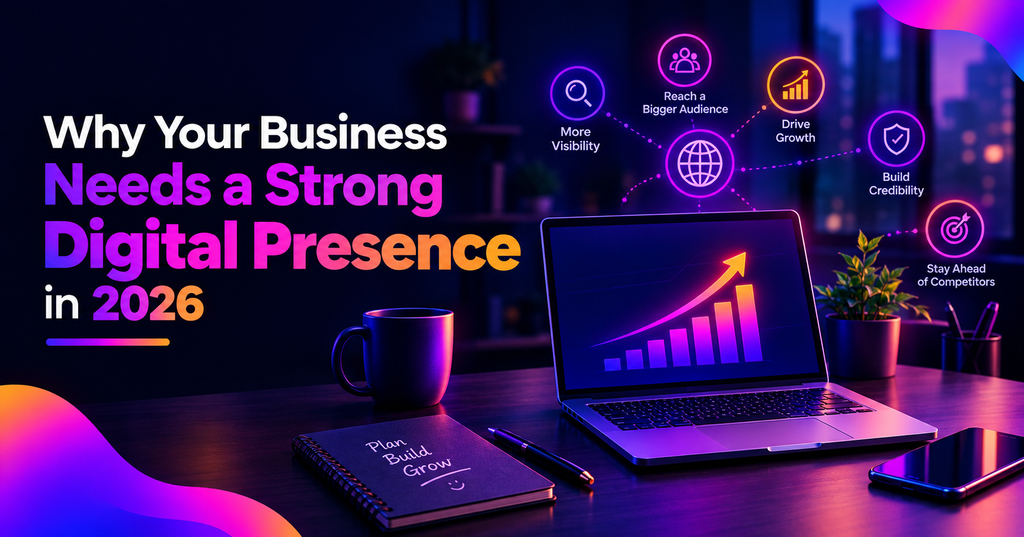
Whether you run a small business, startup, e-commerce brand, local business, or established company, building a strong digital presence can help you become more visible, build credibility, connect with your audience, and drive real business growth.
But what exactly makes a digital presence strong, and why is it so important in 2026?
Let’s find out.
What Is a Digital Presence?
A digital presence is the way your business appears and interacts with people across the internet.
It includes everything customers can find about your business online, such as:
- Your business website
- Social media profiles
- Google Business Profile
- Search engine results
- Online reviews
- Blogs and articles
- Digital advertisements
- Videos and other content
- Online directories
However, simply having these platforms is not enough.
Your digital presence should be consistent, professional, informative, and designed around your target audience.
For example, a customer might discover your business through Instagram, search for your brand on Google, visit your website, read your blog, check your reviews, and then contact you.
Every one of these interactions contributes to your overall digital presence.
1. Your Customers Are Already Online
One of the biggest reasons your business needs a strong digital presence is simple: your customers are online.
People use search engines and social media every day to discover products, services, brands, and solutions.
Imagine someone is looking for a digital marketing agency.
They might search for agencies on Google, compare websites, look at social media profiles, read reviews, and explore the services offered before making a decision.
If your business has little or no online visibility, you may never even become part of that customer’s consideration.
A strong digital presence gives your business an opportunity to appear when potential customers are actively looking for what you offer.
2. Your Website Builds Trust and Credibility
Your website is often one of the first places potential customers visit after discovering your business.
Think of your website as your digital storefront.
A professional website can quickly communicate:
- Who you are
- What you offer
- Who you help
- Why customers should choose you
- How they can contact you
But having a website alone isn’t enough.
Your website should be modern, mobile-friendly, easy to navigate, visually appealing, and focused on the user’s experience.
It should also have clear calls-to-action such as “Get a Quote,” “Book a Consultation,” “Contact Us,” or “Learn More.”
A good website doesn’t just provide information.
It helps guide visitors toward becoming leads or customers.
3. Social Media Helps You Build Relationships
Social media has completely changed the way businesses communicate with their audiences.
Platforms such as Instagram, Facebook, LinkedIn, and YouTube allow brands to interact directly with potential and existing customers.
But social media shouldn’t be treated as a platform where you simply post advertisements.
People want content that provides value.
Businesses can use social media to share:
- Educational tips
- Industry insights
- Product demonstrations
- Behind-the-scenes content
- Customer stories
- Short-form videos
- FAQs
- Helpful guides
- Brand updates
Consistent and valuable content can help your business stay visible while creating stronger relationships with your audience.
The goal isn’t simply to gain followers.
The goal is to build an audience that trusts your brand and is interested in what you offer.
4. SEO Helps People Discover Your Business
Imagine having an excellent website but hardly anyone finding it.
That’s where Search Engine Optimization, or SEO, becomes important.
SEO helps improve your website’s visibility when people search for relevant products, services, or information.
For example, if someone searches for a service your business provides, appearing in relevant search results can bring valuable visitors to your website.
SEO can involve:
- Keyword research
- On-page optimization
- Technical SEO
- Helpful content
- Local SEO
- Internal linking
- Website performance
- Quality backlinks
SEO is not an overnight strategy.
It requires consistency, useful content, and ongoing optimization.
However, when done properly, it can become a valuable long-term source of organic traffic and potential customers.
5. Online Reviews Influence Buying Decisions
Before choosing a business, customers often want to know what other people think about it.
Online reviews can play an important role in building trust.
Positive and genuine reviews can give potential customers more confidence, while a lack of reviews or unanswered negative feedback can create uncertainty.
Businesses should encourage satisfied customers to leave genuine reviews and maintain accurate information across important online platforms.
It is also important to respond professionally to feedback.
Even when a customer has a negative experience, a thoughtful response can demonstrate that your business takes customer satisfaction seriously.
Your online reputation is an important part of your digital presence.
6. A Strong Digital Presence Helps You Compete
Your competitors are also fighting for your customers’ attention.
If your competitors have professional websites, active social media accounts, strong search visibility, positive reviews, and consistent content, they may attract customers who could have chosen your business.
A strong digital presence allows your business to compete for attention in a crowded marketplace.
You don’t necessarily need to be everywhere.
Instead, focus on the platforms where your target audience is most active.
With the right strategy, even smaller businesses can reach highly targeted audiences and build recognition beyond their immediate location.
7. Digital Marketing Is Measurable
Another major advantage of digital marketing is that you can measure your performance.
Instead of relying completely on assumptions, you can use data to understand how people are interacting with your business online.
You can track metrics such as:
- Website traffic
- Traffic sources
- Social media engagement
- Leads generated
- Conversion rates
- Cost per lead
- Advertising performance
- Sales
For example, a social media campaign might generate thousands of views but very few enquiries.
Another campaign may receive fewer views but generate significantly more leads.
This data helps you understand what is actually contributing to business growth.
8. Consistency Builds Brand Recognition
A strong digital presence isn’t created by posting once in a while.
Your audience should experience a consistent brand across your website, social media, advertisements, and other digital platforms.
Your:
- Logo
- Brand colors
- Visual style
- Tone of communication
- Messaging
- Brand values
should feel connected.
Consistency makes your business easier to recognize and remember.
Over time, repeated exposure to a consistent and professional brand can help strengthen customer familiarity and trust.
9. Your Digital Presence Works 24/7
One of the biggest advantages of having an online presence is that your business can remain discoverable even when you’re not actively working.
A potential customer can visit your website, read your services, explore your portfolio, check reviews, read your blog, or send an enquiry at almost any time.
Your digital presence can continue working in the background.
However, this doesn’t mean you should create a website and forget about it.
Your website, content, social media, and SEO strategy need regular updates and improvement.
When managed properly, your digital presence becomes a long-term business asset.
How to Build a Strong Digital Presence in 2026
Building a strong digital presence doesn’t mean trying to do everything at once.
Start with the fundamentals.
1. Build a Professional Website
Create a website that is fast, mobile-friendly, easy to navigate, and designed around your customers’ needs.
2. Invest in SEO
Research what your customers are searching for and create useful content that helps your business appear in relevant search results.
3. Choose the Right Social Platforms
You don’t need to be active on every platform.
Focus on the platforms where your target audience actually spends time.
4. Create Valuable Content
Educate your audience, answer their questions, solve problems, and demonstrate your expertise.
5. Build Your Online Reputation
Encourage genuine customer reviews and respond professionally to feedback.
6. Use Paid Advertising Strategically
Paid advertising can help you reach specific audiences faster, especially when launching products, generating leads, or promoting offers.
7. Track and Improve
Monitor your results regularly and use data to identify what’s working and what needs improvement.
Final Thoughts
In 2026, your digital presence is more than just a website or a social media account.
It is the complete online experience people have with your business.
From the moment someone discovers your brand through a search engine or social media post to the moment they visit your website, read your content, check your reviews, and finally become a customer, every interaction matters.
A strong digital presence can help your business become more visible, build credibility, connect with the right audience, and create opportunities for long-term growth.
At Rise Digitally, we believe digital marketing should be about more than likes, followers, or impressions. It should be about creating a digital presence that supports real business goals.
Because in today’s digital-first world, the question isn’t whether your business needs an online presence.
The real question is: How strong is your digital presence?