
Social media is no longer just a platform for posting attractive pictures and collecting likes. For businesses, it has become an important channel for building awareness, engaging audiences, generating inquiries, and converting potential customers. However, simply posting every day does not guarantee business results.
A successful social media marketing strategy connects content, audience research, engagement, advertising, and conversion goals. When these elements work together, social media can become a consistent source of qualified leads rather than just another place to promote your brand.
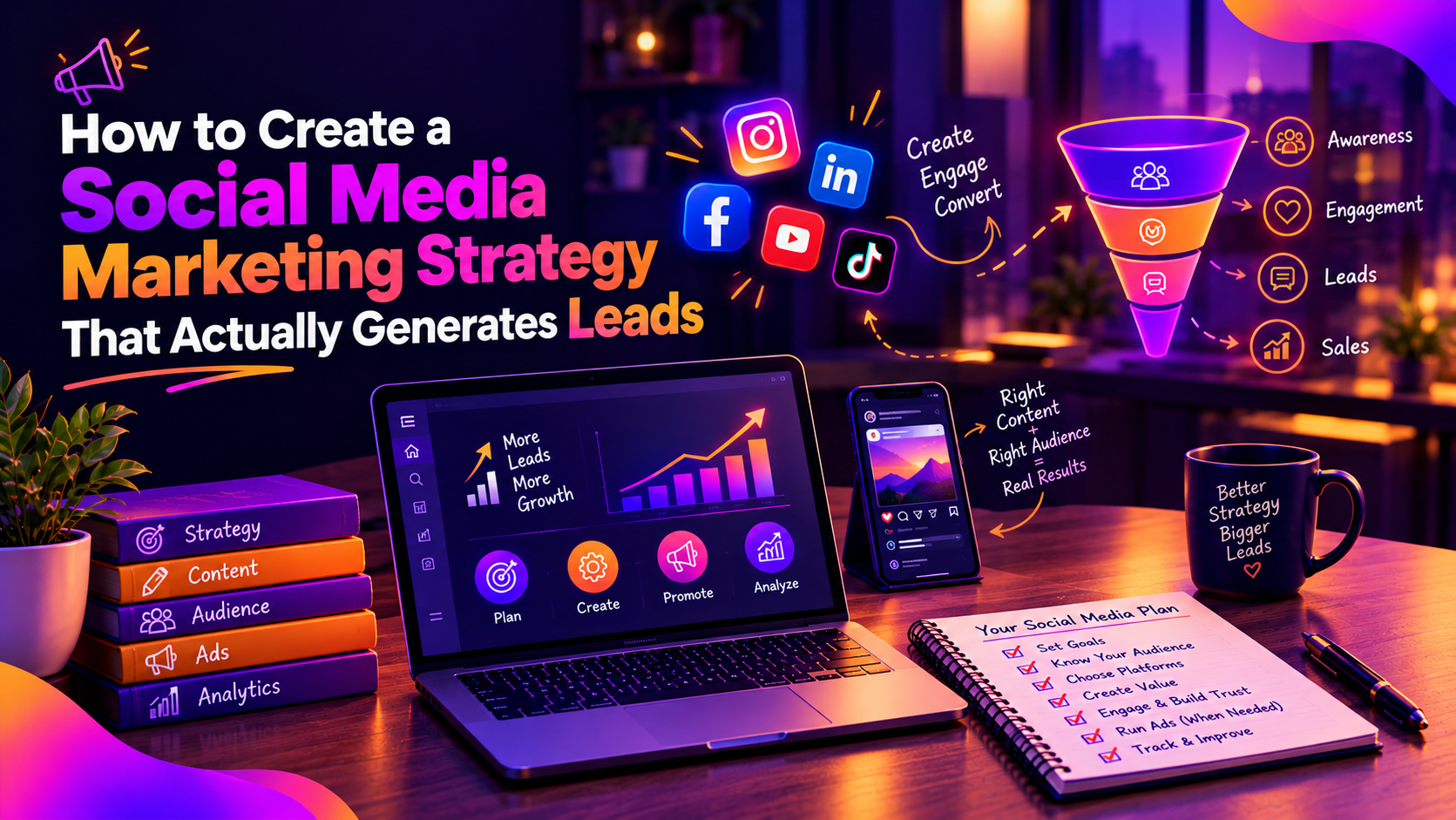
1. Define Your Lead Generation Goals
Before creating content, determine exactly what you want your social media activity to achieve. Your goals could include generating website inquiries, receiving WhatsApp messages, collecting form submissions, increasing consultation bookings, or driving product purchases.
A clear social media marketing strategy begins with measurable objectives. Instead of saying that you want more engagement, define a target such as increasing qualified inquiries or generating a specific number of leads each month.
Clear goals also make it easier to measure whether your efforts are producing actual business value.
2. Understand Your Target Audience
You cannot create effective content without knowing who you want to reach. Research your audience’s interests, problems, preferences, purchasing behavior, and common questions.
A strong social media marketing strategy should be built around the people most likely to become customers. Consider their age range, location, profession, challenges, goals, and the type of information they look for online.
The better you understand your audience, the easier it becomes to create content that feels relevant instead of promotional.
3. Choose the Right Social Media Platforms
You do not need to be active on every social platform. Focus on channels where your target audience is already spending time.
For example, Instagram can be useful for visual brands, LinkedIn can work well for B2B companies, Facebook can support community-focused businesses, and YouTube can help brands that rely on educational or demonstration-based content.
An effective social media marketing strategy prioritizes quality and consistency rather than trying to maintain an identical presence everywhere.
4. Create Content Around Customer Problems
Content should provide a reason for people to stop scrolling. Instead of constantly promoting your products or services, create posts that address the problems your audience wants to solve.
Your social media marketing strategy can include educational posts, quick tips, industry insights, tutorials, FAQs, customer stories, behind-the-scenes content, and practical guides.
For example, a digital marketing agency could create content about improving website visibility, generating leads, creating better advertisements, or avoiding common marketing mistakes.
Useful content builds trust and gives potential customers a reason to follow your brand.
5. Build Strong Content Pillars
Content pillars make your publishing process more organized. Select several recurring topics that represent your brand and audience interests.
A social media marketing strategy could include four or five pillars such as educational content, product or service information, customer success stories, industry trends, and brand personality.
These pillars prevent your social feed from becoming repetitive while ensuring that every post has a clear purpose.
6. Use Strong Hooks and Calls to Action
People make quick decisions about whether to continue watching or reading a social media post. Your opening line, headline, image, or video hook therefore matters.
A lead-focused social media marketing strategy should also include clear calls to action. Tell people what to do next, whether that means visiting your website, sending a message, downloading a resource, booking a consultation, or requesting information.
A good call to action removes confusion and creates a simple path toward conversion.
7. Use Short-Form Video Strategically
Short-form videos, reels, and similar formats can help businesses capture attention and communicate information quickly.
Instead of creating videos only for entertainment, use your social media marketing strategy to connect short-form content with business goals. Demonstrate products, answer customer questions, explain services, share quick tips, show processes, or address common misconceptions.
Keep videos focused on one idea and make the opening seconds useful enough to encourage viewers to continue watching.
8. Build Trust Before Asking for the Sale
People are unlikely to become customers simply because they see an advertisement once. They need reasons to believe that your business understands their needs and can deliver what it promises.
A strong social media marketing strategy should therefore include trust-building content. Share testimonials, case studies, customer experiences, educational information, team insights, results, and behind-the-scenes moments where appropriate.
Trust reduces uncertainty and can make potential customers more comfortable taking the next step.
9. Use Social Media Advertising
Organic content can build awareness, but paid social advertising can help businesses reach specific audiences more efficiently.
A complete social media marketing strategy may combine organic posts with paid campaigns. Businesses can promote high-performing content, retarget website visitors, advertise lead-generation offers, or reach audiences based on relevant characteristics and interests.
However, advertising should lead to a clear offer and conversion process. Sending users to an unclear page can reduce the value of otherwise effective campaigns.
10. Create Landing Pages That Convert
Getting someone to click your social media post is only the beginning. Your landing page must continue the same message and make the next action obvious.
Your social media marketing strategy should connect advertisements and posts with relevant landing pages. Keep the page focused, explain the benefit clearly, provide important information, and include a visible call to action.
The fewer unnecessary steps a potential customer has to take, the easier it can be to convert interest into an inquiry.
11. Engage With Your Audience
Social media is designed for interaction, not one-way broadcasting. Respond to comments, answer questions, acknowledge messages, and participate in relevant conversations.
Engagement should be an active part of your social media marketing strategy because potential customers may ask questions before making a purchase decision.
Fast and helpful responses can also demonstrate professionalism and show that your business values its audience.
12. Track Leads and Measure Performance
Likes and followers can provide useful signals, but they do not tell the complete business story. Track metrics that connect social media activity with actual results.
A data-driven social media marketing strategy should monitor reach, engagement, profile visits, website clicks, messages, leads, conversion rates, and revenue where possible.
Review your results regularly. Identify which topics, formats, offers, and campaigns generate meaningful responses, then use those insights to improve future content.
Common Mistakes to Avoid
Many businesses make the mistake of focusing only on follower growth. Others post inconsistently, use overly promotional content, ignore comments, or create content without a clear objective.
Another common problem is trying to copy competitors without understanding the audience behind their success. Your social media marketing strategy should reflect your own brand, customers, resources, and business goals.
Avoid buying followers or engagement because artificial numbers do not necessarily create genuine customers.
How to Turn Followers Into Customers
Lead generation becomes easier when every stage of the customer journey is considered. Attract attention with useful content, build interest through education, establish trust through proof, and provide a simple next step.
A conversion-focused social media marketing strategy should make it easy for interested users to move from a post to a profile, website, message, consultation, or purchase.
The goal is not to turn every follower into a customer immediately. Instead, create a system that continuously moves qualified prospects toward a meaningful business conversation.
Final Thoughts
Creating a social presence is easy. Creating one that consistently contributes to business growth requires planning, testing, and measurement.
The best social media marketing strategy combines audience understanding, valuable content, strong hooks, clear calls to action, trust-building, advertising, conversion-focused landing pages, and performance tracking.
Start with clear goals, understand your customers, choose the right platforms, and create content that genuinely helps people. Then measure what generates leads and continuously improve your approach.
When social media is treated as a complete marketing channel rather than simply a posting schedule, it can become a powerful source of qualified leads and long-term business growth.